
What does « lutte » mean in French?
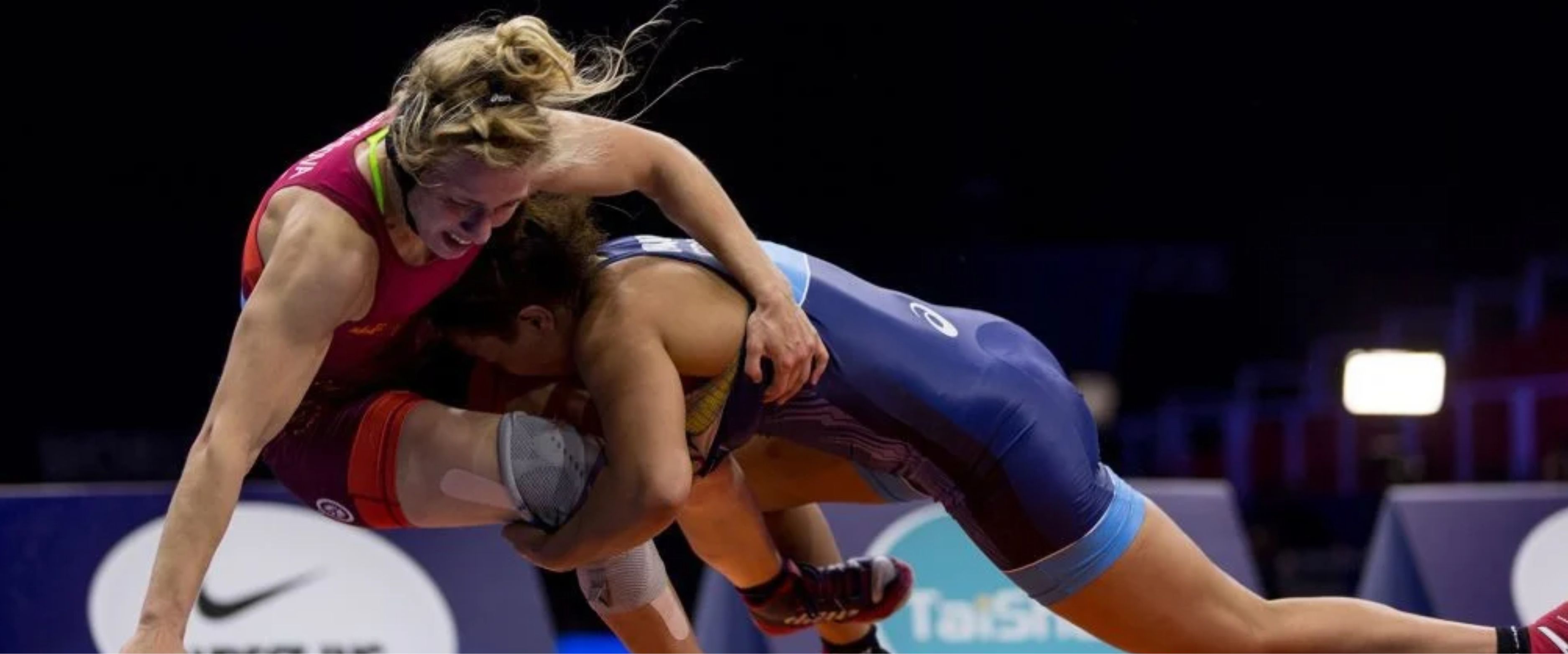
You're reading an article in French about a campaign against inequality. A few days later, you're watching a sports competition on television. In both cases, the word « lutte » comes up, but it doesn't describe the same reality at all.
When you're learning French, this kind of situation highlights a common difficulty: one French word can have several translations depending on the context. To understand an article, follow a conversation or express yourself precisely, it isn't enough to look a word up in a dictionary. You also need to know how it's used.
What does « lutte » mean in French?
Let's go back to those two situations. In the first, the topic is a commitment to defending a cause. In the second, two athletes face each other on a mat. In English, the translation changes depending on the intended meaning.
| Meaning in English | French | Article | Example in French | English translation |
|---|---|---|---|---|
| Wrestling, the sport | lutte | la | Il pratique la lutte. | He wrestles. |
| A fight, a struggle | combat | le | Le combat était difficile. | The fight was difficult. |
| To fight | se battre | — | Ils se battent pour leurs droits. | They are fighting for their rights. |
| To struggle | lutter | — | Il lutte pour trouver une solution. | He is struggling to find a solution. |
A good habit is to memorise French nouns with their article. This makes them easier to remember and to reuse correctly in a sentence.
« Lutte » as a sport in French
Now imagine you want to tell a colleague about a competition you watched last weekend. You want to explain which discipline you discovered, talk about the athletes and describe the match. To do this, a few specific terms can enrich your vocabulary.
| English | French | Article |
|---|---|---|
| Wrestling | lutte | la |
| A wrestling match | combat de lutte | le |
| Freestyle wrestling | lutte libre | la |
| Greco-Roman wrestling | lutte gréco-romaine | la |
| A wrestler (m. / f.) | lutteur / lutteuse | le / la |
| An opponent (m. / f.) | adversaire | l' (m. / f.) |
| A hold | prise | la |
| A throw | projection | la |
| A counterattack | contre-attaque | la |
| The wrestling mat | tapis de lutte | le |
| A weight category | catégorie de poids | la |
| A point | point | le |
| A penalty | pénalité | la |
| The referee | arbitre | l' (m. / f.) |
| A victory | victoire | la |
| A defeat | défaite | la |
These words will help you follow a competition, understand sports commentary or chat with someone who practises this sport.
Lutter contre: expressing a fight or resistance
The next day, you meet your colleague again during the coffee break. The conversation moves away from sport to a current affairs topic: an awareness campaign against poverty. You understand the general idea, but you wonder how to express this kind of commitment in French.
In this context, the vocabulary of fighting takes on a figurative meaning. It lets you talk about a cause, a social issue or a situation that people are trying to remedy.
| Expression in English | Expression in French |
|---|---|
| The fight against climate change | la lutte contre le changement climatique |
| The fight against poverty | la lutte contre la pauvreté |
| The fight against racism | la lutte contre le racisme |
| To fight a problem | lutter contre un problème |
Here, the preposition contre expresses opposition to something. It appears in noun phrases as well as in constructions with the verb lutter (to fight, to struggle).
How do you translate « de haute lutte » into English?
You then read a sports report: a team has just won a particularly difficult match. The journalist points out that the victory was won « de haute lutte ». A word-for-word translation would risk making the sentence sound unnatural in English.
To convey this idea of a result achieved through great effort, you can use different expressions depending on the situation:
- after a hard-fought battle: après un combat difficile;
- a hard-won victory: une victoire obtenue au terme d'une lutte longue et acharnée.
For example: The team won after a hard-fought battle (L'équipe a gagné après un combat acharné). The sentence emphasises the difficulties faced before the victory, not simply the final result.
This nuance matters: in a foreign language, understanding the intention behind an expression often helps you find a more natural wording.
Example sentences with « lutte » in French
To reuse this vocabulary in a variety of contexts, here are a few more sentences:
| English | French |
|---|---|
| Class struggle has shaped history. | La lutte des classes a marqué l'histoire. |
| The fight for freedom goes on. | La lutte pour la liberté continue. |
| He is fighting cancer. | Il lutte contre le cancer. |
| The fight for equality is important. | La lutte pour l'égalité est importante. |
| She is struggling to find a solution. | Elle lutte pour trouver une solution. |
| They won after a hard-fought battle. | Ils ont remporté la victoire après une lutte difficile. |
As you've discovered, translating « lutte » depends on the context. Understanding these nuances is essential to make progress in the language. To take stock of your knowledge, take our free online French level test and find out which areas to improve.
Test your level online for free >
Conclusion
The next time you hear about a sports competition or a fight for a cause, you'll be able to recognise the differences between lutte and combat. And in a conversation with a French-speaking colleague, you'll be able to choose the word that suits the situation.
It's these small nuances that, as your learning progresses, help you understand French better and express yourself with greater confidence.
To keep enriching your vocabulary, also discover our article on sports vocabulary in French. You'll find other useful terms for talking about sporting activities and better understanding conversations on this topic.