Discover the essential vocabulary to talk about boxing in French
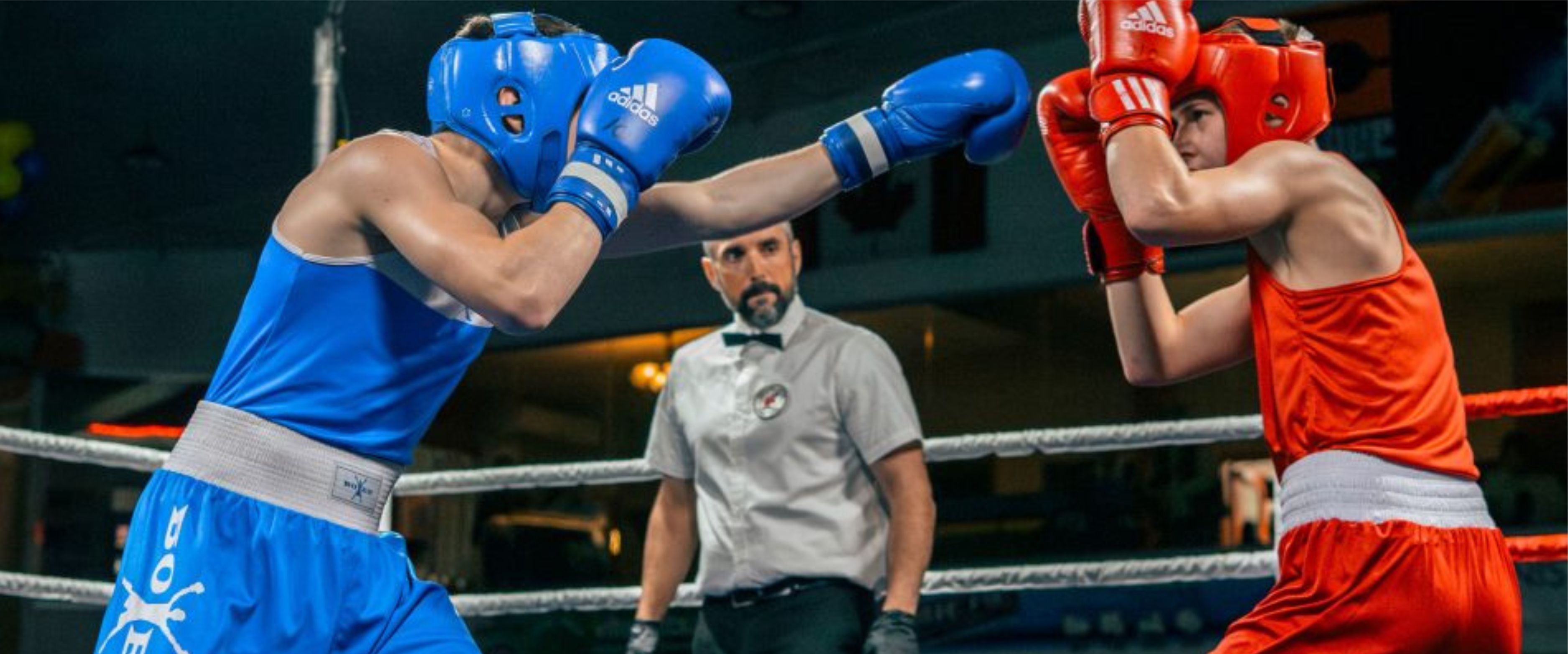
On a fight night, in a living room in Geneva or Paris, the atmosphere is like no other. The announcer introduces the two boxers, the room rumbles and the commentary speeds up in rhythm with the exchanges. You catch the fighters' names, a few numbers and the rising intonation when a punch lands, but part of the commentary escapes you at exactly the moment the action becomes interesting.
Yet boxing vocabulary rests on a handful of words that come back again and again. Whether you practise this sport, follow the big events on television or simply want to talk with French speakers, knowing these terms will help you better understand a fight and the conversations around the ring.
How do you say boxing in French?
First surprise: French doesn't settle for a single word. The most common is la boxe, which refers to boxing in the sense in which you practise it and watch it. Alongside it, la boxe anglaise refers more specifically to the sporting discipline, the one discussed in a newspaper or a report, as distinguished from boxe française or boxe thaïe. The nuance is subtle, but the ear gets used to it quickly.
Here are the main words to remember:
| English | French |
|---|---|
| Boxing | boxe |
| The sport of boxing | boxe anglaise |
| Professional boxing | boxe professionnelle |
| The boxer (male) | boxeur |
| The boxer (female) | boxeuse |
| To do boxing | boxer |
These few terms form the basis of everything else. You'll notice along the way a very French mechanism: the same root keeps recombining, and boxe linked to another word by de is enough to build combat de boxe or ring de boxe.
The vocabulary of a boxing match in French
Whether you follow a fight on television or practise boxing at the gym, certain terms come back regularly. They make it possible to describe the different stages of a fight, the people and the equipment present around the ring, but also the elements found during a training session. Mastering this vocabulary will help you better understand match commentary as well as exchanges with a coach or other practitioners.
Here is the essential vocabulary of a boxing match:
| English | French |
|---|---|
| The boxing match | combat de boxe |
| The round | round / reprise |
| The knockout | KO / knock-out |
| The retirement | abandon |
| The referee | arbitre |
| The gloves | gants |
| The mouthguard | protège-dents |
| The punching bag | sac de frappe |
| The ring | ring |
| The boxing ring | ring de boxe |
These words serve you well beyond the Saturday-night sofa. In front of a match on television, in a conversation with enthusiasts or at the training gym, they stop you from losing the thread as soon as the pace picks up, and they make the course of a combat de boxe far easier to read.
Simple and useful expressions to talk about boxing
Knowing the vocabulary is a first step. But to follow a fight or talk about what is happening in the ring, you also need to know how to use those words in simple sentences.
Rest assured, these exchanges rely on very simple structures. A few well-chosen formulations already allow you to talk about your practice, recount how a fight unfolded or comment on a boxer's performance, without having to build every sentence from scratch.
Here are a few useful expressions you can easily reuse in your conversations:
-
Je fais de la boxe. / Je boxe. → I do boxing. / I box.
-
Je m'entraîne à la boxe. → I train in boxing.
-
Il a gagné par KO. → He won by knockout.
-
Le combat se déroule sur 12 rounds. → The fight goes twelve rounds.
-
Le boxeur est sur le ring. → The boxer is in the ring.
-
L'arbitre commence le combat. → The referee starts the fight.
These simple sentences will let you talk about your passion for boxing, but a general command of the language will then help you continue the conversation well beyond the ring.
If you want to go further and develop your French day to day, click below to discover French courses to progress quickly.
Discover our personalised French courses>
The boxing world champion in French
Finally, there is a category of evenings all of its own: those where two boxers step into the ring for a world title. The stakes change everything: the crowd holds its breath between rounds, and the commentary fills with vocabulary you don't hear elsewhere, that of the champion, the belt and the decisive fight.
To follow these big events, a few specific terms are particularly useful.
Here are the main words to remember:
| English | French |
|---|---|
| The boxing world champion | le champion du monde de boxe |
| The world champion | le champion du monde |
| The title fight | le combat pour le titre |
| The world championship fight | le combat de championnat du monde |
This vocabulary takes on its full meaning when you know the place boxing occupies in French-speaking countries. Marcel Cerdan, Georges Carpentier and Tony Yoka are not just names from the archives: they come back regularly in conversations, documentaries and comparisons between generations. Knowing them means entering French-speaking sporting culture through a side door.
Boxing, a new way to practise French
Watching a fight, following a training session, exchanging a couple of sentences with someone who shares the same passion: boxing offers a learning ground that few textbooks manage to reproduce. The vocabulary there is concrete, it comes back constantly, and it sticks all the better because it is associated with precise images and emotions.
By learning the words of the ring and the expressions that circulate around it, you broaden your vocabulary while talking about a subject that genuinely interests you. It is also an indirect but effective way of discovering French-speaking sporting culture, starting from the language rather than from the results.
Are you passionate about sport and want to learn even more vocabulary? Also discover our article on basketball in French: the essential vocabulary to follow a game, and explore even more words and expressions linked to the world of sport.